- For appointment (+91) 97906 97907
Diabetic Retinopathy Treatment in Thiruvallur
Diabetic retinopathy treatment in Thiruvallur depends on the stage of retinal disease, the effect on vision and the presence of complications such as diabetic macular edema or abnormal retinal blood-vessel growth.
Diabetic retinopathy develops when diabetes-related changes damage the small blood vessels supplying the retina. The disease can progress gradually, and early diabetic retinopathy may have no noticeable symptoms. This makes regular retinal examinations important for people with diabetes.
Treatment is therefore not based on symptoms alone. An ophthalmologist needs to assess the retina and determine whether the condition is stable, progressing or associated with vision-threatening complications.
What Is Diabetic Retinopathy?
Diabetic retinopathy is a diabetes-related retinal disease caused by damage to blood vessels in the retina.
The retina is the light-sensitive tissue at the back of the eye that receives light and sends visual information to the brain.
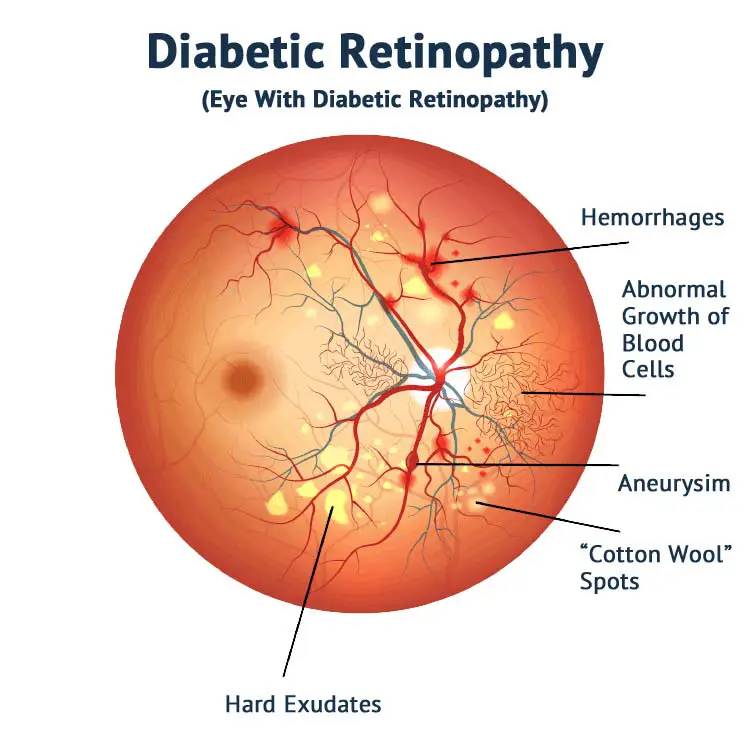
Persistently elevated blood sugar can damage retinal blood vessels. These vessels may become abnormal, leak fluid or bleed, while advanced disease can cause abnormal new blood-vessel growth.
The condition can range from mild retinal changes that require monitoring to advanced disease that may threaten vision.
Why Can Diabetes Affect the Retina?
The retinal blood vessels are particularly important because the retina requires a continuous supply of oxygen and nutrients.
Diabetes can gradually damage these small vessels.
As the disease progresses, retinal blood vessels may:
- Become weakened
- Leak fluid
- Become blocked
- Bleed
- Contribute to retinal swelling
- Stimulate abnormal new blood-vessel growth
These changes can affect vision when they involve important areas of the retina.
Can Diabetic Retinopathy Have No Symptoms?
Yes. This is one of the most important reasons people with diabetes should not wait for vision problems before having their eyes examined.
Early diabetic retinopathy often produces no symptoms.
A person may feel that their vision is normal while retinal changes are already developing.
As the disease becomes more advanced, symptoms may include:
- Blurred vision
- Difficulty reading
- Changes in vision that come and go
- Floaters
- Dark spots
- Cobweb-like shapes
- Reduced vision
Regular retinal assessment can detect changes before significant symptoms develop.
What Are the Different Stages of Diabetic Retinopathy?
Diabetic retinopathy is commonly described according to the severity of retinal blood-vessel changes.
Non-Proliferative Diabetic Retinopathy
Non-proliferative diabetic retinopathy (NPDR) is an earlier form of diabetic retinopathy in which damaged retinal blood vessels can develop leakage or blockage without abnormal new blood-vessel growth.
NPDR can be classified as:
- Mild
- Moderate
- Severe
The severity helps determine the appropriate monitoring and treatment approach.
Not every patient with NPDR requires immediate laser or injection treatment. Some patients may be monitored at appropriate intervals.
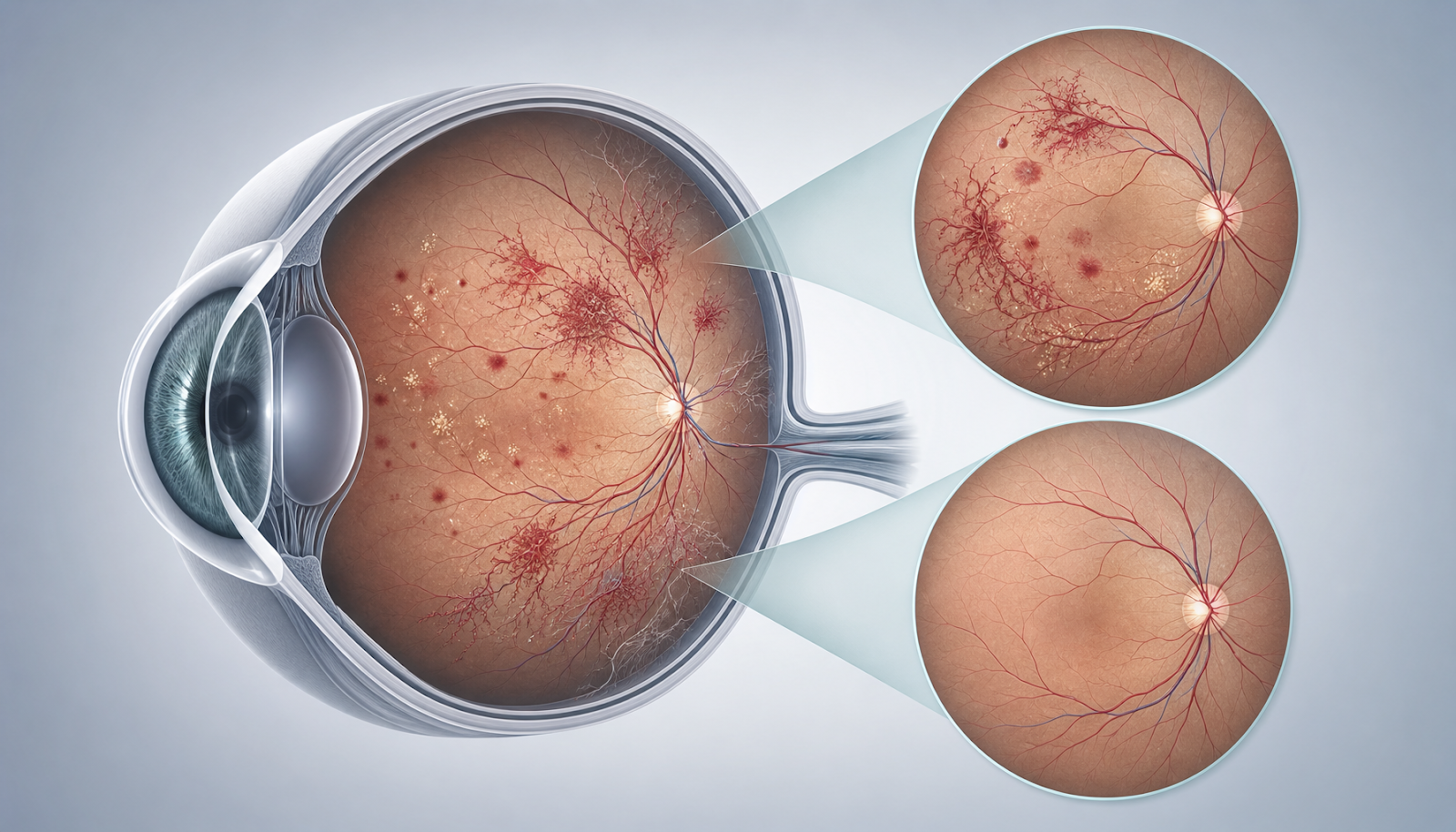
Proliferative Diabetic Retinopathy
Proliferative diabetic retinopathy (PDR) is an advanced stage in which abnormal new blood vessels can develop because of inadequate retinal blood supply.
These fragile vessels can bleed into the vitreous and may contribute to scar formation.
Advanced disease can therefore cause serious complications, including vitreous haemorrhage and tractional retinal detachment.
When proliferative disease is identified, timely retinal treatment and follow-up are important.
What Is Diabetic Macular Edema?
Diabetic macular edema (DME) occurs when diabetes-related blood-vessel changes cause fluid to accumulate in the macula.
The macula is responsible for detailed central vision.
Swelling in this area can therefore cause:
- Blurred central vision
- Difficulty reading
- Difficulty recognising faces
- Reduced visual detail
- Distorted vision in some cases
DME can occur with different stages of diabetic retinopathy and requires retinal assessment to determine the appropriate treatment.
Why Is Diabetic Eye Screening Important?
A diabetic eye screening in Thiruvallur can identify retinal changes before the patient notices a decline in vision.
The National Eye Institute recommends that people with diabetes have a comprehensive dilated eye examination at least once a year, although people with established retinopathy may need examinations more frequently depending on their condition.
The appropriate interval should be determined by the treating eye-care professional.
What Happens During a Diabetic Retinal Examination?
The examination may include:
- Visual acuity assessment
- Pupil dilation
- Examination of the retina
- Assessment for retinal bleeding or leakage
- Evaluation of the macula
- Eye-pressure measurement when appropriate
- Retinal imaging or other tests when indicated
Dilation allows the ophthalmologist to examine the internal structures of the eye more thoroughly.
Why Is Retinal Imaging Useful?
Retinal imaging can provide detailed views of the retina and can assist the ophthalmologist in documenting retinal changes.
Depending on the clinical situation, imaging may help evaluate:
- Retinal haemorrhages
- Macular changes
- Swelling
- Abnormal blood vessels
- Changes over time
The exact imaging tests required depend on the patient's retinal findings.
When Should a Person With Diabetes See an Eye Specialist?
A person with diabetes should not wait for visual symptoms before having retinal evaluation.
An eye examination is particularly important if there is:
- A long history of diabetes
- Previously diagnosed diabetic retinopathy
- Blurred vision
- New floaters
- Dark spots in vision
- Difficulty reading
- Sudden changes in vision
- Previous retinal treatment
People who already have diabetic retinopathy may require a more frequent follow-up schedule than someone without retinal changes.
Can Blood Sugar Control Affect Diabetic Retinopathy?
Yes. Managing diabetes is an important part of reducing the risk of diabetic eye disease and vision loss.
Diabetes management may involve:
- Following prescribed diabetes medication
- Maintaining appropriate blood glucose control
- Regular physical activity where medically appropriate
- Following a healthy eating plan
- Managing blood pressure
- Managing cholesterol
Eye treatment and diabetes management work together; retinal treatment does not replace medical management of diabetes.
Does Every Patient With Diabetic Retinopathy Need Treatment?
No. Treatment depends on the stage and retinal findings.
Some patients may require:
- Observation
- Regular retinal examinations
- Diabetes and systemic-risk management
- Intravitreal medication
- Laser treatment
- Vitreoretinal surgery in advanced cases
The appropriate approach should be determined after examining the retina.
The National Eye Institute notes that early disease may be monitored, while more advanced disease may require injections, laser treatment or surgery depending on the retinal complication.
When Are Injections Used for Diabetic Retinopathy?
Intravitreal injections may be used when specific retinal complications such as diabetic macular edema or certain forms of advanced diabetic retinopathy are present.
Anti-VEGF medicines can reduce abnormal blood-vessel activity and retinal leakage in appropriate conditions.
Steroid treatments may also be considered for selected cases involving retinal swelling.
The number and frequency of injections vary between patients and depend on the retinal response.
When Is Laser Treatment Used?
Laser treatment may be recommended for selected cases of advanced diabetic retinopathy.
A commonly used approach for proliferative disease is panretinal photocoagulation (PRP), which uses laser treatment to reduce abnormal retinal blood-vessel growth.
Laser may also have a role in selected retinal swelling or leakage situations.
The choice depends on the pattern and severity of retinal disease.
When Is Surgery Considered?
Advanced diabetic retinopathy can sometimes result in substantial bleeding or scar formation within the eye.
In selected cases, a vitrectomy may be considered.
This is more commonly relevant when complications such as significant vitreous haemorrhage or tractional retinal detachment are present.
Surgery is not the routine treatment for every person with diabetic retinopathy.
Can Diabetic Retinopathy Be Prevented From Worsening?
There is no single step that guarantees that diabetic retinopathy will never progress.
However, appropriate diabetes management, regular retinal examinations and timely treatment of vision-threatening complications can help reduce the risk of serious vision loss.
Patients should continue their diabetes treatment even when their eyes feel normal.
Why Early Detection Matters
Diabetic retinopathy can progress before a person notices changes in vision.
Monitoring
Closer follow-up
Retinal treatment when indicated
The goal is to identify vision-threatening changes before they result in avoidable visual loss.
Diabetic Eye Care in Thiruvallur
For patients searching for diabetic retinopathy treatment in Thiruvallur, the appropriate care begins with retinal assessment rather than selecting a treatment based only on symptoms.
Deepam Eye Hospital's official website lists Diabetic Retinopathy among its eye-care services and reports diabetic retinopathy cases treated by the hospital.
The Thiruvallur location provides a local option for patients seeking ophthalmic evaluation.
Who May Be at Greater Risk of Diabetic Retinopathy?
The risk of diabetic retinopathy increases with factors such as:
- Longer duration of diabetes
- Poorly controlled blood glucose
- High blood pressure
- Abnormal cholesterol levels
- Pregnancy in people with diabetes
The longer a person has diabetes, the greater the likelihood of developing diabetic eye disease. This makes ongoing eye examinations important even when there are no symptoms.
The Thiruvallur location provides a local option for patients seeking ophthalmic evaluation.
When Should Diabetic Retinopathy Be Checked Urgently?
A person with diabetes should seek prompt ophthalmic assessment if they experience:
- Sudden vision loss
- A sudden increase in floaters
- Dark spots or shadows
- New flashes of light
- Sudden worsening of blurred vision
- Distortion of central vision
These symptoms can have several causes, including serious retinal complications, and should not be ignored.
Diabetic Retinopathy Care: A Long-Term Approach
Managing diabetic retinal disease is not always a one-time treatment.
A patient's care may involve:
Diabetes management
Regular retinal assessment
Monitoring
Treatment when indicated
Follow-up
Some patients may need repeated retinal treatments or closer monitoring, while others may remain stable with observation.
The treatment schedule should always be individualised.
How Is Diabetic Retinopathy Evaluated?
A detailed retinal evaluation helps determine the severity of diabetic retinopathy and whether treatment is required.
Depending on the patient's findings, the ophthalmologist may assess:
- Visual acuity
- Pupil response
- Retina and macula
- Retinal blood-vessel changes
- Retinal bleeding
- Macular swelling
- Abnormal blood-vessel growth
- Vitreous changes
A dilated retinal examination is an important part of assessing diabetic retinopathy.
What Is an OCT Scan for Diabetic Retinopathy?
Optical coherence tomography (OCT) is a non-invasive imaging test that produces detailed cross-sectional images of the retina.
It can help the ophthalmologist evaluate the macula and identify retinal thickening or fluid associated with diabetic macular edema.
OCT can also be useful during follow-up to compare retinal changes over time and assess the response to treatment.
Why Might a Fluorescein Angiogram Be Recommended?
A fluorescein angiogram is an imaging test used to examine blood flow through the retinal vessels.
A fluorescent dye is injected into a vein, and photographs are taken as the dye passes through the retinal circulation.
It may be considered when the ophthalmologist needs additional information about:
- Retinal blood-vessel leakage
- Areas of abnormal circulation
- Retinal non-perfusion
- Abnormal new blood vessels
The National Eye Institute notes that fluorescein angiography may be used when severe diabetic retinopathy or diabetic macular edema is suspected.
How Is Treatment Decided After the Retinal Examination?
Treatment is selected according to the retinal findings rather than simply the presence of diabetes.
The ophthalmologist may recommend:
Observation and monitoring → for selected early or stable disease
Intravitreal injections → for appropriate diabetic macular edema or selected proliferative disease
Laser treatment → for selected retinal complications
Vitrectomy → for certain advanced complications such as significant vitreous bleeding or tractional problems
Some patients may require more than one treatment approach during the course of their disease.

What Are Anti-VEGF Injections?
Anti-VEGF medicines are injected into the eye to block vascular endothelial growth factor (VEGF), a protein involved in abnormal blood-vessel growth and retinal leakage.
They may be used for conditions including:
- Diabetic macular edema
- Selected cases of diabetic retinopathy
- Abnormal retinal blood-vessel growth
Anti-VEGF treatment can reduce retinal leakage and may improve or preserve vision in appropriate patients.
When Are Injections Used for Diabetic Macular Edema?
When diabetic retinopathy causes swelling in the macula, intravitreal treatment may be considered.
Anti-VEGF therapy is an important treatment option for diabetic macular edema.
The decision depends on factors such as:
- Whether the edema involves the central macula
- Effect on vision
- OCT findings
- Previous treatment
- Response to treatment
The treatment plan is individualised rather than based solely on the presence of retinal swelling.
How Are Intravitreal Injections Given?
An intravitreal injection is performed using sterile technique.
Typically:
- The eye is examined.
- Numbing medicine is applied.
- The eye is cleaned to reduce infection risk.
- A very small needle is used to deliver the medicine into the eye.
- The patient receives post-treatment instructions.
Most patients can return home after the procedure.
Are Multiple Injections Necessary?
Some patients require more than one injection.
The number and frequency depend on:
- Retinal response
- OCT findings
- Visual changes
- Recurrence of macular edema
- Type of medication
- Severity of disease
Some patients may initially require frequent injections, with treatment intervals adjusted as the retinal condition responds.
What Can You Expect Immediately After an Eye Injection?
Temporary symptoms can occur after an intravitreal injection.
These may include:
- Mild irritation
- Temporary discomfort
- A sensation of something being in the eye
- Small floating bubbles or spots
These symptoms often settle within a short period.
However, increasing eye pain or worsening vision after an injection requires prompt contact with the treating eye doctor, as these can be warning signs of an infection or another complication.
What Is Panretinal Photocoagulation?
Panretinal photocoagulation (PRP), also called scatter laser treatment, is used in selected cases of advanced or proliferative diabetic retinopathy.
The laser creates controlled treatment spots in areas of the retina outside the central macula.
The objective is to reduce abnormal retinal blood-vessel activity and lower the risk of severe complications.
When May PRP Be Recommended?
PRP may be considered when proliferative diabetic retinopathy has developed and the ophthalmologist believes laser treatment is appropriate.
The decision depends on:
- Extent of abnormal blood vessels
- Retinal blood supply
- Existing bleeding
- Macular condition
- Previous treatment
Laser and anti-VEGF treatment may sometimes be used as part of the same overall treatment strategy.
Is Panretinal Laser Treatment Completed in One Session?
Not necessarily.
Some patients may require more than one treatment session depending on the extent of retinal disease and the amount of laser required.
The National Eye Institute notes that scatter laser treatment may require more than one session.
What Happens During Retinal Laser Treatment?
Before treatment, numbing medicine is used and a specialised lens may be placed on the eye.
During the procedure, the patient may notice:
- Flashes of light
- Mild discomfort
- Stinging or aching sensations
Vision can be blurry for the remainder of the day, so patients may need someone to accompany them home.
Can Laser Treatment Affect Vision?
Laser treatment is intended to reduce the risk of serious retinal complications, but it can have side effects.
Depending on the treatment, patients may experience changes involving:
- Peripheral vision
- Colour vision
- Night vision
The potential benefits and risks should therefore be discussed before treatment.
Is Laser Used for Diabetic Macular Edema?
Laser can have a role in selected cases of diabetic macular edema.
A focal or grid laser approach may be used to treat leaking retinal blood vessels in appropriate circumstances.
For many patients with center-involving diabetic macular edema, anti-VEGF injections are an important treatment option, while laser may be considered depending on the clinical situation and treatment response.
What Is Vitrectomy?
Vitrectomy is a retinal surgery in which the vitreous gel inside the eye is removed, allowing the surgeon to manage certain retinal complications.
In diabetic retinopathy, it may be considered when there is significant bleeding or other advanced vitreoretinal pathology.
.The National Eye Institute identifies diabetic retinopathy among the conditions that can require vitrectomy
When May Vitrectomy Be Needed?
Vitrectomy may be considered for selected patients with:
- Significant vitreous haemorrhage
- Persistent bleeding affecting vision
- Tractional retinal detachment
- Severe scar-related retinal problems
- Other advanced vitreoretinal complications
It is not a routine treatment for early diabetic retinopathy.
What Happens During Vitrectomy?
During the procedure, the surgeon creates very small openings in the eye and removes much of the vitreous gel.
Depending on the condition, the surgeon may also:
- Treat retinal bleeding
- Apply laser
- Repair retinal traction
- Place gas inside the eye
- Use silicone oil when required
The exact surgical approach depends on the retinal problem being treated.
What Is Recovery Like After Vitrectomy?
Recovery varies according to the procedure and the patient's retinal condition.
After surgery, the eye may remain:
- Red
- Swollen
- Sore
- Blurred
Eye drops are generally used during recovery, and follow-up appointments are needed to monitor healing.
If a gas bubble is placed inside the eye, the patient may need specific positioning and may be advised to avoid air travel or high-altitude travel until the bubble has resolved.
Why Are Follow-Up Visits Important?
Diabetic retinal disease can change over time even after treatment.
Follow-up allows the ophthalmologist to assess:
- Vision
- Retinal bleeding
- Macular thickness
- Fluid accumulation
- Abnormal blood-vessel growth
- Response to injections
- Laser-treatment effects
- Need for additional treatment
The follow-up interval depends on the severity of the condition and the treatment being used.
Can Diabetic Retinopathy Return After Treatment?
Treatment does not remove the underlying tendency for diabetes-related retinal damage.
Retinal disease may remain stable, improve, or develop further changes depending on the patient's condition and systemic risk factors.
Some patients therefore require ongoing retinal monitoring even after successful treatment.
Why Should Diabetes Management Continue During Eye Treatment?
Eye treatment addresses retinal complications, but diabetes itself continues to affect blood vessels throughout the body.
Patients should continue following their physician's recommendations for:
- Blood glucose management
- Blood pressure control
- Cholesterol management
- Diabetes medication
- Regular medical reviews
The National Eye Institute specifically identifies blood glucose, blood pressure and cholesterol control as important aspects of reducing diabetic retinopathy risk and vision loss.
What Should You Bring to a Diabetic Retina Consultation?
If you are visiting a diabetic retinopathy specialist in Thiruvallur, it can be useful to bring:
- Previous eye reports
- OCT scans
- Previous retinal photographs
- Injection records
- Laser-treatment records
- Current spectacle prescription
- List of diabetes medications
- Recent blood-sugar or HbA1c information
- Blood-pressure and cholesterol records when available
Previous retinal reports can help the ophthalmologist compare changes over time.
Diabetic Retinopathy Treatment in Thiruvallur
Patients searching for diabetic retinopathy treatment in Thiruvallur may require anything from periodic retinal monitoring to injections, laser treatment or vitreoretinal surgery depending on the stage and complication.
A practical treatment pathway is:
Retinal examination
Imaging when required
Disease staging
Treatment decision
Retinal treatment
Follow-up
The appropriate treatment should be determined after examining the individual eye.
Can Diabetic Retinopathy Be Reversed?
Diabetic retinopathy cannot simply be reversed by improving vision with spectacles.The retinal changes caused by diabetes need to be assessed and managed according to their severity.
Treatment can help control vision-threatening complications and reduce the risk of further visual damage.
The appropriate goal may be to:
- Monitor stable retinal disease
- Reduce retinal swelling
- Control abnormal blood-vessel growth
- Treat retinal bleeding
- Address traction or retinal detachment when present
- Preserve remaining vision
The outcome depends on the stage of disease and the condition of the retina when treatment begins.
What Happens If Diabetic Retinopathy Is Left Untreated?
Untreated diabetic retinopathy can progress from mild retinal changes to more serious disease.
Advanced complications may include:
- Diabetic macular edema
- Vitreous haemorrhage
- Abnormal blood-vessel growth
- Scar tissue formation
- Tractional retinal detachment
- Significant vision loss
Not every patient will develop these complications, but regular retinal evaluation helps identify patients who are at greater risk.
Can Diabetic Retinopathy Affect Both Eyes?
Yes. Diabetic retinopathy can affect both eyes.
However, the severity does not necessarily have to be identical in each eye.
One eye may have:
- Mild retinal changes
while the other may have:
- More advanced retinopathy
- Macular edema
- Previous bleeding
- Previous laser or injection treatment
For this reason, both eyes should be evaluated individually.
Why Is One Eye Sometimes Treated Before the Other?
Treatment is based on the findings in each eye.
One eye may require treatment earlier because it has:
- More retinal swelling
- More advanced retinopathy
- Abnormal new blood vessels
- Significant bleeding
- Greater risk of vision loss
The ophthalmologist determines the treatment priority after comparing both eyes.
Diabetic Retinopathy Treatment Options Compared
| Treatment Approach | When It May Be Considered | Main Objective | Is It Required for Everyone? |
|---|---|---|---|
| Observation & monitoring | Selected mild or stable disease | Detect progression early | No |
| Anti-VEGF injections | Selected diabetic macular edema and advanced retinal vascular changes | Reduce leakage and abnormal blood-vessel activity | No |
| Laser treatment | Selected proliferative or retinal-leakage patterns | Reduce abnormal retinal vascular activity or treat selected leakage | No |
| Vitrectomy | Certain advanced complications | Manage vitreous bleeding or tractional retinal problems | No |
| Diabetes and systemic-risk management | All people with diabetes | Reduce risk of progression and complications | Important throughout care |
This comparison is for general information. The appropriate treatment depends on the retinal findings in each individual eye.
Can You Continue Your Normal Routine With Diabetic Retinopathy?
Many people with diabetic retinopathy can continue their usual activities, particularly when the disease is mild or appropriately managed.
However, activities may need to be adjusted when vision is significantly affected.
Patients should discuss specific concerns involving:
- Driving
- Work
- Reading
- Screen use
- Exercise
- Travel
with their treating doctor.
Can People With Diabetic Retinopathy Exercise?
Physical activity is an important component of diabetes management for many people, but the appropriate exercise plan depends on overall health.
Patients with advanced eye disease or recent retinal procedures should ask their treating doctor whether any temporary activity restrictions are required.
Exercise recommendations should also take into account other medical conditions.
Can Diabetic Retinopathy Affect Driving?
Reduced or distorted vision can interfere with driving safety.
Problems may become particularly noticeable when there is:
- Reduced central vision
- Significant macular edema
- Vitreous haemorrhage
- Advanced retinal disease
- Glare or poor contrast
Patients should not assume that having a treatment automatically means they are safe to drive. Actual visual function needs to meet applicable requirements.
Can Diabetic Retinopathy Affect Reading?
Diabetic macular edema and other retinal changes can interfere with detailed central vision.
Patients may notice:
- Difficulty reading small print
- Words appearing unclear
- Difficulty recognising faces
- Need for brighter illumination
- Reduced reading endurance
Appropriate retinal treatment may help when the retinal disease is responsible, but the degree of improvement varies.
Why Is HbA1c Relevant to Diabetic Eye Care?
HbA1c provides an indication of average blood glucose levels over a period of time.
Blood glucose management is an important part of reducing the risk of diabetes-related complications, including diabetic retinopathy.
However,a good HbA1c result does not mean that retinal examinations can be skipped.
People with diabetes should continue the eye-care schedule recommended for their individual condition.
Does Blood Pressure Matter in Diabetic Retinopathy?
Yes. High blood pressure can contribute to vascular damage and is an important systemic risk factor in people with diabetes.
Managing blood pressure alongside blood glucose and cholesterol can form part of an overall strategy for reducing the risk of diabetic complications.
Should Diabetes Medication Be Changed Because of Diabetic Retinopathy?
Eye treatment and diabetes treatment are separate but connected aspects of care.
Patients should not stop, increase or change diabetes medicines based solely on their eye symptoms.
Changes to diabetes medication should be made by the doctor managing the patient's diabetes.
The ophthalmologist can communicate retinal findings when coordination between eye and medical care is needed.
Is Diabetic Retinopathy Treatment Usually a One-Time Procedure?
Not always.
Depending on the condition, a patient may need:
- Periodic retinal examinations
- Repeat OCT scans
- Additional injections
- Additional laser treatment
- Continued monitoring after surgery
The treatment schedule can change according to the retinal response.
Why Are Previous Retinal Reports Useful?
Diabetic retinopathy can change gradually.
Previous:
- OCT scans
- Retinal photographs
- Angiography reports
- Injection records
- Laser records
can help the ophthalmologist compare the current condition with earlier examinations. This can be particularly useful when deciding whether retinal disease is stable or progressing.
This can be particularly useful when deciding whether retinal disease is stable or progressing.
What If Vision Improves After Treatment?
Improved vision does not necessarily mean that diabetic retinopathy has disappeared permanently.
Retinal disease can require continued monitoring even when the patient feels better.
Follow-up helps determine whether:
- Retinal swelling remains controlled
- Abnormal blood vessels have regressed
- Further treatment is needed
- The disease remains stable
Patients should therefore follow the recommended review schedule.
When Should a Person With Diabetes Seek Prompt Eye Care?
A person with diabetes should seek prompt ophthalmic assessment for sudden or significant visual changes such as:
- Sudden loss of vision
- A sudden increase in floaters
- New flashes
- A dark curtain or shadow
- Sudden worsening of blurred vision
- New distortion of central vision
These symptoms can indicate retinal or other eye problems that require timely evaluation.
Dr. Vimala
Consultant Ophthalmologist
Dr. Vimala is a Consultant Ophthalmologist with interests in:
Areas of Interest
Her interest in medical retina is relevant to the broader evaluation of retinal conditions, including diabetic retinal disease.
However, the doctor profile should not be expanded to claim additional retina-specific fellowships, procedures or qualifications unless those credentials are independently verified.
Diabetic Retinopathy Treatment in Thiruvallur
What is diabetic retinopathy?
Diabetic retinopathy is a diabetes-related disease of the retina caused by damage to retinal blood vessels.
Where can I get diabetic retinopathy treatment in Thiruvallur?
Patients searching for diabetic retinopathy treatment in Thiruvallur can seek a retinal evaluation at Deepam Eye Hospital's Thiruvallur location.
Can diabetic retinopathy be treated?
Yes. Depending on the stage and complications, treatment may include monitoring, injections, laser treatment or vitreoretinal surgery.
Does diabetic retinopathy always cause symptoms?
No. Early diabetic retinopathy can develop without noticeable symptoms, which is why regular retinal examinations are important.
What is diabetic macular edema?
Diabetic macular edema is swelling caused by fluid accumulation in the macula as a result of diabetes-related retinal blood-vessel changes.
Are injections used for diabetic retinopathy?
Intravitreal injections, particularly anti-VEGF medicines, may be used for selected diabetic macular edema and other retinal complications.
When is laser treatment used?
Laser treatment may be recommended for selected cases of proliferative diabetic retinopathy and certain retinal leakage patterns.
When is vitrectomy required?
Vitrectomy may be considered for advanced complications such as significant vitreous haemorrhage or tractional retinal problems.
Can diabetic retinopathy cause blindness?
Advanced untreated diabetic retinopathy can cause severe vision loss. Early detection and appropriate treatment can help reduce the risk of serious visual complications.
Can diabetic retinopathy come back after treatment?
Retinal disease can remain active or develop again after treatment, so ongoing monitoring may be necessary.
Frequently Asked Questions
The appropriate interval depends on the person's diabetes status and whether diabetic retinopathy is already present. A comprehensive dilated examination is commonly recommended at least annually for people with diabetes, while established retinopathy may require more frequent follow-up.
Yes. Early diabetic retinopathy may not produce noticeable symptoms.
Spectacles can correct refractive errors but do not treat the retinal blood-vessel changes caused by diabetic retinopathy.
The eye is numbed before an intravitreal injection. Patients may experience temporary irritation or discomfort afterward, but significant or increasing pain requires prompt medical assessment.
There is no fixed number for everyone. The treatment schedule depends on the retinal condition and response to therapy.
Laser treatment is primarily intended to control certain retinal complications and reduce the risk of further vision loss. It does not guarantee restoration of vision already lost.
Yes. Many patients are managed through monitoring, systemic risk-factor control, injections or laser treatment. Surgery is reserved for selected advanced complications.
Yes. Both eyes can be affected, although the severity can differ between them.
Do not stop or alter diabetes medication without advice from the doctor managing your diabetes.
A sudden increase in floaters, especially when accompanied by flashes or reduced vision, requires prompt ophthalmic assessment because it can be associated with serious retinal complications.
Diabetic Retinopathy Treatment in Thiruvallur at Deepam Eye Hospital
Patients looking for diabetic retinopathy treatment in Thiruvallur, diabetic eye treatment in Thiruvallur, diabetic retinopathy screening in Thiruvallur or retina care in Thiruvallur can consult the ophthalmic team at Deepam Eye Hospital.
The Thiruvallur branch is located at No. 77/1, C.V. Naidu Salai, Thiruvallur, with retinal and diabetic eye care available as part of the hospital's ophthalmic services.
Early detection and appropriate management can help monitor diabetic eye changes and reduce the risk of vision-related complications. Treatment may include regular monitoring, injections, laser therapy or surgery depending on the retinal condition.
Schedule a diabetic retinal evaluation to assess your eye health, identify any signs of diabetic retinopathy and understand the most appropriate treatment options for your condition.
Contact UsMedical Disclaimer
This page is intended for general educational purposes and does not replace an individual eye examination or medical advice. Diabetic retinopathy varies significantly between patients, and treatment depends on retinal findings, disease stage, systemic health and response to previous treatment. No treatment can guarantee a specific visual outcome. Patients experiencing sudden vision loss, new flashes, a sudden increase in floaters, a dark curtain or shadow, severe eye pain or other sudden visual changes should seek prompt ophthalmic assessment.
